
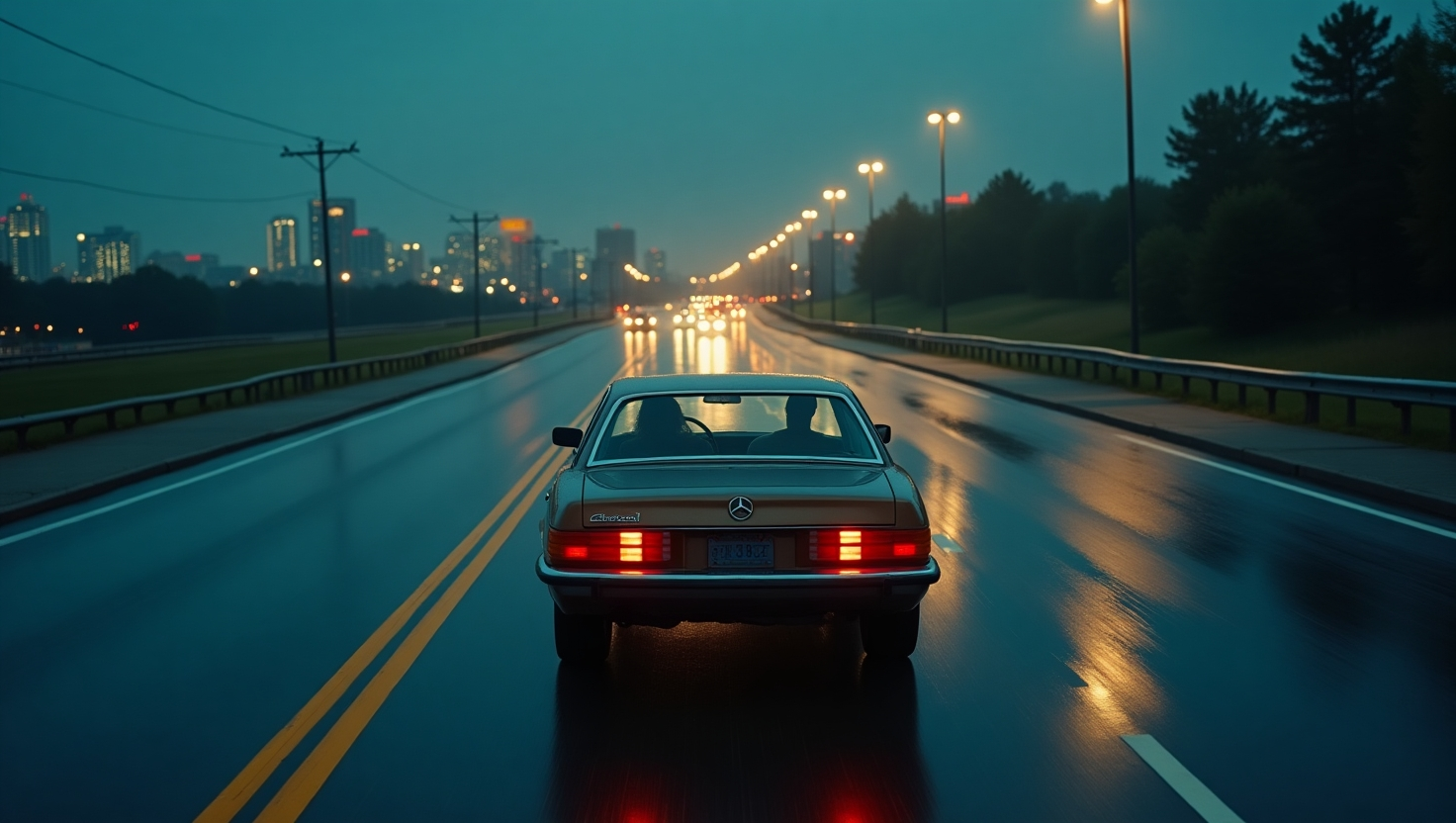
The Tracy Chapman Fast Car lyrics meaning begins with an intoxicating possibility: perhaps life can be different. A car and an open road appear to offer escape from poverty and responsibility. Yet Tracy Chapman gradually dismantles that dream as her narrator discovers that changing location does not necessarily change the patterns controlling a life.
Chapman wrote “Fast Car” for her self-titled debut album Tracy Chapman, released in 1988. Produced by David Kershenbaum and released by Elektra Records, the album arrived when mainstream pop was dominated by considerably bigger productions. Its restrained acoustic storytelling immediately distinguished Chapman. The album became an international success and earned six Grammy nominations, with Chapman winning three awards.
“Fast Car” reached No. 6 on the Billboard Hot 100 and won the Grammy for Best Female Pop Vocal Performance.
Tracy Chapman performs under her real name rather than a stage name. For further background see Tracy Chapman on Wikipedia.
Fast Car as a Symbol of Freedom
The fast car as a symbol of freedom is beautifully simple. The vehicle represents movement and therefore possibility. If the narrator can physically leave her circumstances perhaps she can also leave poverty disappointment and responsibility behind.
ADVERTISEMENT
What are Affiliate Links
Click the image to visit vendor’s site
The early sections of the song consequently feel hopeful.
The narrator is escaping poverty and searching for a better life, but importantly she is not expecting luxury. She wants employment stability and the feeling that she belongs somewhere.
As a fan I think that modest ambition makes the story particularly moving. She is not chasing fame or wealth. She simply wants an opportunity.
Other songs explore hope from very different directions. Little Mix Little Me considers self-belief while Elbow One Day Like This captures the exhilarating feeling that life might suddenly change for the better.

When Escape Becomes Another Cycle
The tragedy is that the new life gradually begins resembling the old one.
The narrator works while her partner fails to provide the stability they imagined. Drinking enters the picture. Responsibilities accumulate.
The cycle of poverty in Tracy Chapmans song becomes especially painful because we have already heard the narrator describe similar problems within her childhood home.
Her father drank. Her mother left. The daughter assumed responsibility.
Now history begins repeating itself.
This is where “Fast Car” becomes more profound than a song about economic hardship. It asks whether we can escape circumstances without first understanding the patterns travelling with us.
The emotional responsibility found in Baby Can I Hold You approaches relationships differently but shares Chapman’s gift for revealing enormous emotional consequences through restrained language.
Hope Disillusionment and Broken Dreams
The combination of hope disillusionment and broken dreams gives “Fast Car” its devastating emotional trajectory.
At first the car belongs to a shared dream.
Eventually the narrator appears prepared to let her partner take it and leave.
The symbol has reversed.
What once represented their escape together becomes a means of separation. The narrator finally recognises that carrying somebody who refuses to move forward is preventing her own progress.
There is sadness in that recognition but also strength.
Songs such as Garth Brooks The Dance</a> similarly ask whether painful outcomes invalidate experiences that once mattered while Joan Armatrading Love and Affection examines our fundamental desire for meaningful emotional connection.
Chapman’s genius is refusing to provide a convenient happy ending.
The narrator has learned something but we do not know what happens next.
That uncertainty is realistic.
Cycle of Poverty in Tracy Chapmans song
“Fast Car” also experienced an extraordinary second life when Luke Combs recorded it in 2023. His version reached No. 2 on the Billboard Hot 100 and brought Chapman’s songwriting to another generation. Chapman subsequently became the first Black woman to win a CMA award when the song received Song of the Year.
Chapman and Combs performed the song together at the 2024 Grammy Awards more than 35 years after the original recording.
Frequently Asked Question
Conclusion
The Tracy Chapman Fast Car lyrics meaning ultimately offers a difficult but valuable life lesson. Opportunity matters but escape requires more than movement. Sometimes progress begins by recognising which responsibilities genuinely belong to us and which have been imposed by somebody else’s refusal to change.
The fast car can provide transportation.
It cannot decide where our life goes.
That decision remains ours.
For more songs exploring choices relationships and personal growth visit Life Lessons in Song. The emotional cost of difficult relationships also connects with Billie Eilish Everything I Wanted and the uncomplicated warmth of Minnie Riperton Lovin You provides an interesting contrast.
“Save the trees, they allow us to breathe.”
– Stephenism
🎵 Soul from the Solo Blogger — Tunes from Túrail.