

The Moody Blues Watching and Waiting Lyrics Meaning takes us to 1969 and an extraordinary period of creativity for the band. Written by Justin Hayward and Ray Thomas, the song closes To Our Children’s Children’s Children, a concept album inspired partly by humanity’s journey into space and the Apollo 11 Moon landing.
Released in 1969, the album was the first issued on the band’s own Threshold Records, making Threshold Records the appropriate label tag. The Moody Blues line-up consisted of Justin Hayward, John Lodge, Mike Pinder, Ray Thomas and Graeme Edge. More background on the group can be found at The Moody Blues on Wikipedia.
Against an album contemplating humanity from an almost cosmic perspective, Watching and Waiting ends with something remarkably intimate: the desire not to be alone.
The Moody Blues Watching and Waiting Lyrics Meaning
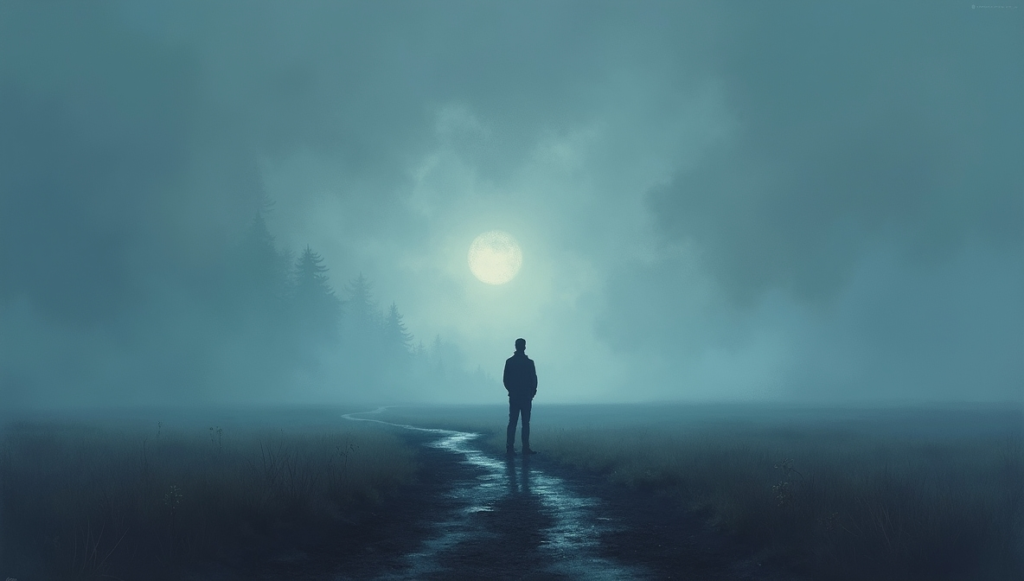
The song presents a lonely figure waiting for companionship. Who that figure represents is deliberately uncertain. We can hear a solitary human being, an extraterrestrial intelligence observing humanity or even a spiritual presence waiting for us to notice it.
That ambiguity creates the search for human connection in The Moody Blues song. Whatever identity we give the narrator, the fundamental desire is immediately recognisable: somebody wants to be acknowledged.
1. Loneliness Exists Even in a Vast Universe
There is something beautifully paradoxical about placing such loneliness within an album concerned with space exploration. Humanity had demonstrated that it could reach beyond Earth, yet technological achievement had done nothing to eliminate our basic need for companionship.
The loneliness and longing in Watching and Waiting therefore feels both personal and universal.
It recalls the introspection of Nights in White Satin, but here loneliness seems to stretch beyond romantic love into the enormous emptiness surrounding us.
Hope Hides Inside the Isolation
The title itself contains the reason I don’t hear this as a completely despairing song. The narrator isn’t merely watching.
He is waiting.
Waiting implies the possibility that somebody might eventually arrive. That small distinction creates the isolation and hope in Watching and Waiting.
2. Waiting Requires Hope
As a fan, this is what I find most affecting about the song. The narrator hasn’t abandoned the possibility of connection.
The vulnerability is quiet rather than dramatic. Unlike a desperate demand to be heard, the song seems almost hesitant. That emotional vulnerability in The Moody Blues ballad gives it enormous tenderness.
The theme develops differently in Isn’t Life Strange, where love and existence are viewed through life’s contradictions, while For My Lady presents connection as something already discovered.
Music That Makes Loneliness Beautiful
The arrangement is crucial to the emotional effect. Hayward’s restrained vocal never overwhelms the song. Acoustic guitar, Mellotron and Ray Thomas’s flute create space around the voice rather than filling every moment.
That restraint makes the music feel suspended between sadness and serenity.
3. Connection Gives the Journey Meaning
Within the context of To Our Children’s Children’s Children, this makes a wonderful final observation. Humanity can explore space, build extraordinary machines and contemplate worlds beyond our own, but achievement alone cannot satisfy our need to belong.
That idea connects naturally with Lost in a Lost World, where alienation takes on a broader social dimension.
It is also precisely the sort of human truth behind the Life Lessons in Song collection: progress can change almost everything around us without changing what we fundamentally need from one another.
Frequently Asked Question
Conclusion
Ultimately, The Moody Blues Watching and Waiting Lyrics Meaning reveals something remarkably simple beneath its cosmic surroundings. Whether we imagine the narrator as human, alien or spiritual matters less than the emotion he represents. To watch means to observe the world from a distance; to wait means still believing that distance can eventually be crossed. The song turns loneliness into something unexpectedly hopeful — because while someone is still waiting for connection, the possibility of finding it remains.
“The hardest words aren’t the ones you can’t find — they’re the ones you found too late.”
Stephenism
🎵 Soul from the Solo Blogger — Tunes from Túrail.