
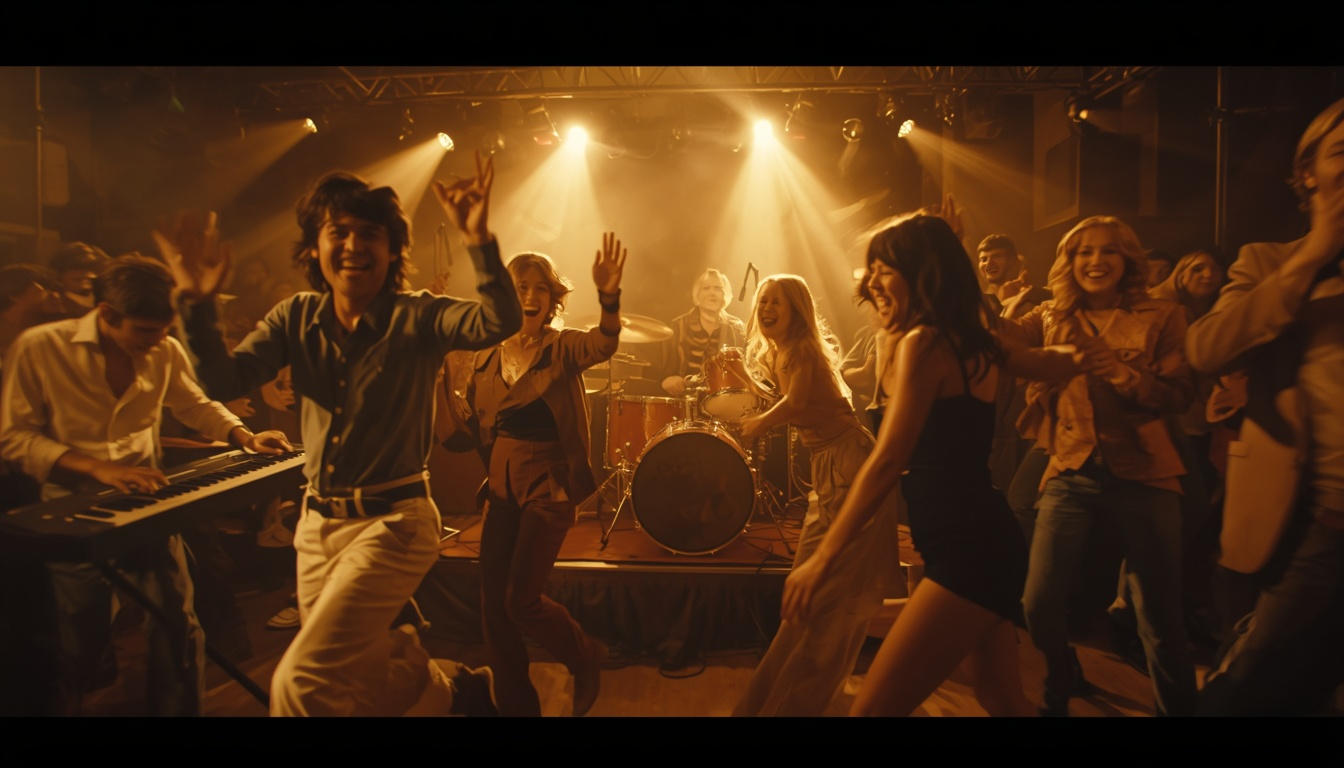
Released in 1970, “Resurrection Shuffle” became the signature hit of British rock trio Ashton, Gardner and Dyke. The Ashton Gardner and Dyke Resurrection Shuffle Lyrics Meaning is less about telling a story than encouraging listeners to loosen up, join in and enjoy themselves.
Written by keyboard player and vocalist Tony Ashton, the song appeared on the group’s 1970 album The Worst of Ashton, Gardner and Dyke and was released on Capitol Records. Its combination of rock, blues, brass and an infectious rhythm helped turn an unconventional band into unlikely chart stars.
How Resurrection Shuffle Came to Life
Ashton, Gardner and Dyke consisted principally of Tony Ashton on keyboards and vocals, Kim Gardner on bass and Roy Dyke on drums. Their background lay in British blues and rock rather than straightforward pop.
The group’s history and wider career can be explored through Ashton Gardner and Dyke.
A Song Built Around Movement
“Resurrection Shuffle” works almost like a set of deliberately silly dance instructions. Rather than asking listeners to master an elaborate routine, Ashton encourages them to move, pose and forget about looking foolish.
That celebration and carefree joy in Resurrection Shuffle is central to its appeal.
The Sound Is Part of the Message
The prominent brass, pounding rhythm and Ashton’s rough-edged vocal make standing still seem almost contrary to the song’s purpose.
There is a similar relationship between musical character and lyrical attitude in Arrows’ “Touch Too Much”, although the emotional territory is very different.
What Do the Resurrection Shuffle Lyrics Mean?
The lyrics are playful rather than cryptic. Dance and movement become symbols of freedom in Resurrection Shuffle, with the listener repeatedly encouraged to abandon inhibition.
The song uses dance and movement as symbols of freedom in Resurrection Shuffle, encouraging listeners to cast aside inhibition and simply enjoy the moment.
Everybody Has a Little Soul
References to love, peace and soul give the song a flavour of the counterculture surrounding popular music at the beginning of the 1970s.
The communal energy and togetherness in Ashton Gardner and Dyke’s song matter more than any literal interpretation of individual instructions. This is something everyone can join.
That simplicity also recalls the direct physical invitation behind Anita Ward’s “Ring My Bell”, where rhythm carries much of the song’s personality.
The communal energy and togetherness in Ashton Gardner and Dyke song invite everyone to join the celebration.
Is Resurrection Meant Literally?
Almost certainly not. The title provides a wonderfully exaggerated description of what music can do to somebody who has been sitting motionless.
The rebirth and renewal symbolism in Resurrection Shuffle therefore works on a playful level: the rhythm brings you back to life.
Ashton Gardner and Dyke Resurrection Shuffle Lyrics Meaning
Beneath the humour sits a remarkably useful idea. We spend considerable time worrying about what other people think of us. “Resurrection Shuffle” suggests that sometimes the healthiest response is simply to stop worrying and join in.
Stop Thinking and Start Moving
Ashton Gardner and Dyke Resurrection Shuffle Lyrics Meaning does not demand introspection. Its lesson comes from participation: loosen up, accept the possibility of looking ridiculous and enjoy the moment.
Instrumental music can communicate emotion without saying anything at all, as explored in Anton Karas and “The Third Man”. “Resurrection Shuffle” takes almost the opposite route, using words mainly to push us towards the physical experience of its music.
That makes its message refreshingly uncomplicated. Music can revive a mood, break through self-consciousness and turn individuals into a temporary community. Sometimes the life lesson really can be as simple as getting up and moving.
That sense of finding something useful within a song is at the heart of Rookie Writer’s Life Lessons in Song.
“Lyrics don’t just tell stories — they sneak truths in through the side door of your mind.”
Stephenism
🎵 Soul from the Solo Blogger — Tunes from Túrail.