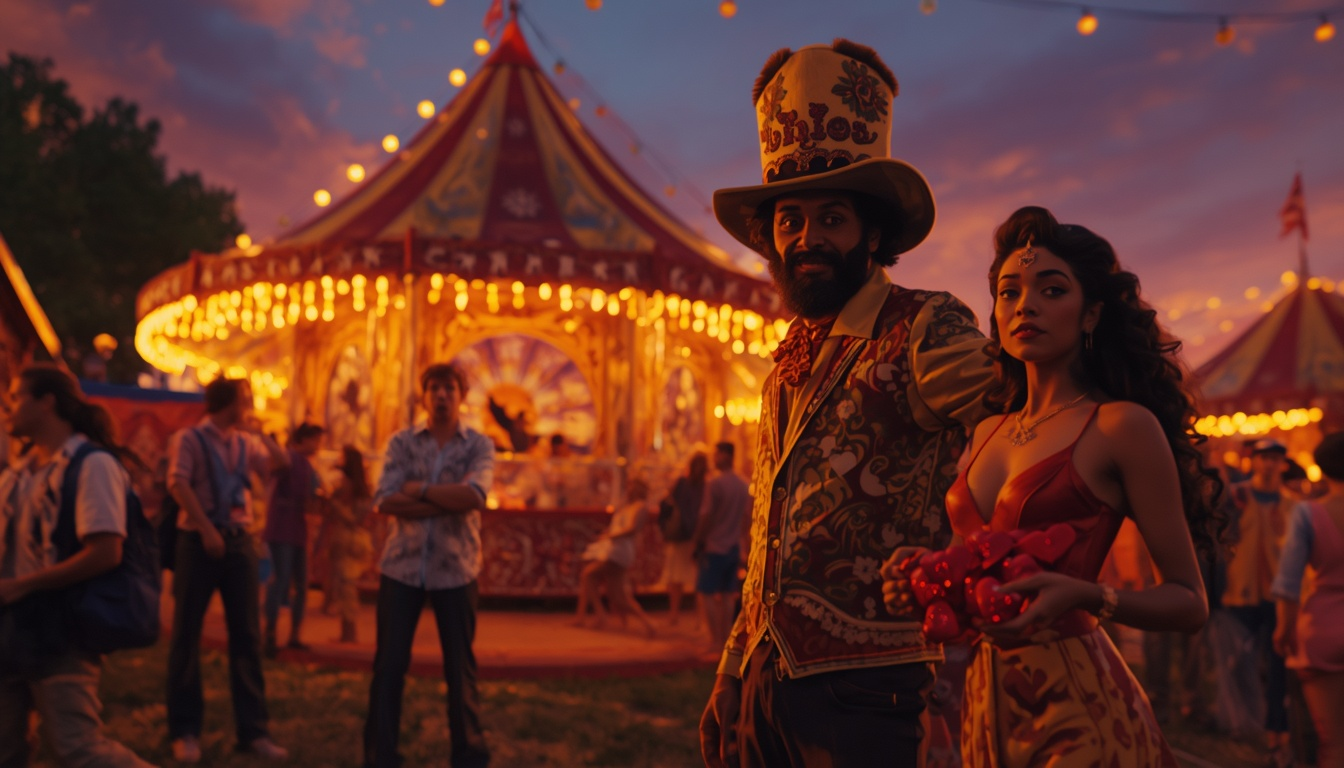
Barry Biggs Sideshow Lyrics Meaning explores a familiar human experience through an unusual setting: a fairground attraction where broken hearts become the entertainment.
The song begins with a thoroughly cheerful introduction. Bright chimes and irresistible drumbeats create an atmosphere of anticipation, almost as though we are approaching a genuine fairground attraction.
Then the showman begins his invitation, and we discover that the entertainment is heartbreak.
Released in 1976, Barry Biggs’ interpretation of Sideshow combines a throbbing reggae rhythm with a story of romantic disappointment. The melody is warm and inviting, yet the lyrics describe something considerably less cheerful.
It is a heartbreak song with a remarkably happy disposition.
The Story Behind Barry Biggs’ Sideshow
Sideshow was originally recorded by the American soul group Blue Magic in 1974. Written by Bobby Eli and Vinnie Barrett, it became a major American hit, reaching number one on the R&B chart and number eight on the Billboard Hot 100.
ADVERTISEMENT
What are Affiliate Links
Click the image to visit vendor’s site
Barry Biggs brought a distinctly Jamaican character to the composition in 1976. His relaxed vocal delivery and reggae-influenced arrangement helped the song reach number three on the UK Singles Chart in January 1977.
For more background on the singer’s career and his interpretation of American soul music, see the Barry Biggs biography.
Blue Magic’s original belongs to the polished Philadelphia soul tradition, while Biggs gives the song a lighter reggae feel.
Both recordings tell essentially the same story, but the musical presentation changes how we experience it.
Biggs’ version almost encourages us to smile while listening to a story about people who have lost their reason to smile.
The Circus Metaphor for Love and Heartbreak
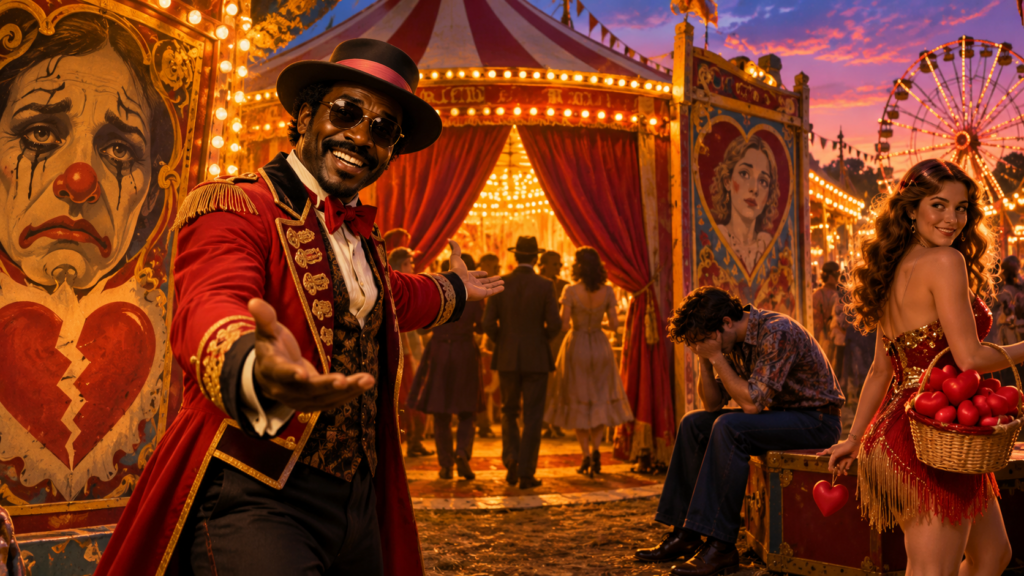
The central image in Sideshow is a carnival attraction where people can observe the consequences of romantic disappointment.
Ordinarily, a sideshow promises something unusual or entertaining. Here, the attraction is human suffering.
When Heartbreak Becomes Entertainment
The narrator adopts the manner of a fairground showman, urging people to hurry before the performance begins.
The invitation builds anticipation. We can almost imagine the crowds gathering, wondering what remarkable entertainment awaits them.
When he encourages everyone to join the queue and purchase tickets, the circus atmosphere becomes complete.
The admission price is just fifty cents.
That detail gives the song a distinctly old-fashioned character, fitting comfortably into its 1970s setting. It also introduces a rather uncomfortable idea: somebody’s emotional suffering has become a spectacle available for a modest admission charge.
Yet the showman is not promising laughter or excitement. He is advertising an experience likely to make his audience cry.
The circus metaphor for love and heartbreak therefore operates on two levels. It is an amusing theatrical device, but it also invites us to consider why we find other people’s romantic misfortunes so fascinating.
The Heartbreak and Loneliness Behind Sideshow
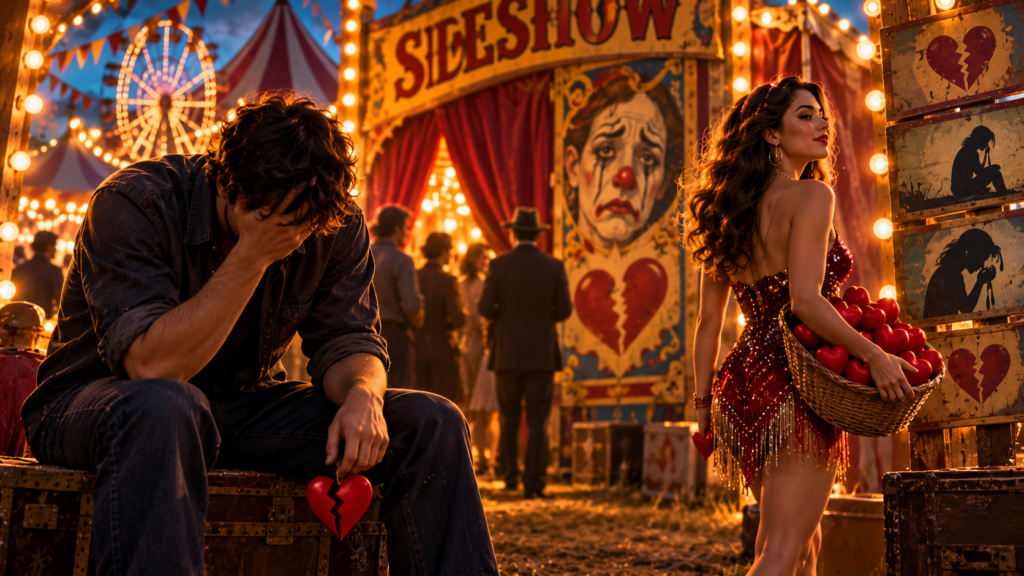
Although the carnival imagery gives the song an imaginative setting, its emotional foundation is familiar.
Relationships can end unexpectedly. Promises may be broken. Someone who once felt secure in another person’s affection can suddenly find themselves alone.
Emotional Vulnerability and Romantic Disappointment
The lyrics introduce several characters whose experiences represent different aspects of romantic suffering.
There is a heartbroken man who appears completely lost, alongside other figures whose experiences suggest that the emotional consequences of failed relationships can linger for an extraordinarily long time.
But one character stands apart.
A girl is portrayed as collecting broken hearts as souvenirs.
That image suggests somebody who treats romantic conquest almost as a hobby, leaving disappointed admirers behind her.
It also creates an interesting imbalance. While the man appears overwhelmed by his emotional loss, the girl seems rather more comfortable with the situation.
Of course, that is one interpretation of the theatrical characters rather than a complete explanation of their circumstances.
Nevertheless, it adds another dimension to the heartbreak and loneliness behind Sideshow.
The song presents emotional vulnerability and romantic disappointment through exaggerated characters, allowing us to recognise familiar human experiences without taking the theatrical presentation entirely seriously.
Love as a Public Spectacle in Barry Biggs’ Song
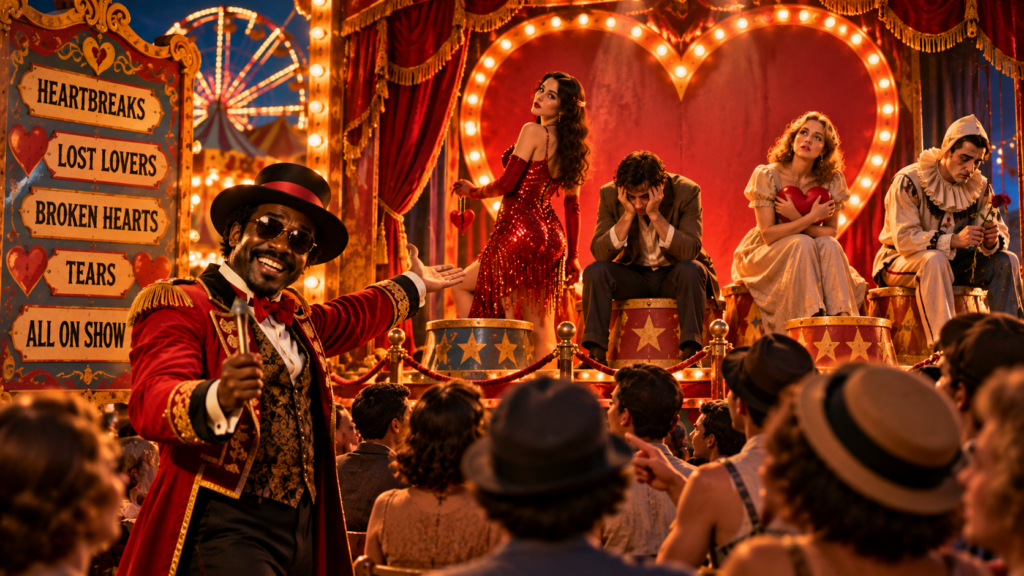
One of the more interesting interpretations of Sideshow concerns the difference between how we appear to others and how we actually feel.
Someone may continue smiling, socialising and behaving normally while privately struggling with a relationship that has ended.
The world sees the performance rather than the pain.
Love as a public spectacle in Barry Biggs’ song can therefore be understood as a reminder that appearances rarely reveal the complete emotional story.
But perhaps the song is also gently poking fun at our tendency to become rather dramatic about romantic disappointment.
The Contrast Between the Music and the Message
This is where Barry Biggs’ recording becomes particularly interesting.
The introduction is thoroughly cheerful, with bright chimes and compelling drumbeats establishing an infectious rhythm before the emotional story has even begun.
The throbbing reggae beat continues throughout, giving the song a warmth that seems almost at odds with the lyrics.
Rather than diminishing the heartbreak, that rhythm can make the emotional contrast even stronger.
The middle section adds further musical jollity to an already heart-wrenching story.
The original Blue Magic recording uses polished vocal harmonies and the orchestral warmth associated with Philadelphia soul. Biggs’ interpretation gives the same narrative a more pronounced reggae character.
Musical arrangements can dramatically influence how we experience a composition. Even something as familiar as Scotland the Brave performed by the Band of the Black Watch demonstrates how instrumentation and performance can shape a listener’s emotional response.
Neither arrangement changes the fundamental story, but Biggs’ version makes it surprisingly easy to enjoy the music while contemplating the sadness underneath.
Perhaps that is part of the appeal. We can acknowledge that heartbreak hurts without insisting that every song about it must sound miserable.
What Can Sideshow Teach Us About Relationships?
The song does not offer a practical guide to recovering from heartbreak. Instead, it presents romantic disappointment as a theatrical attraction populated by people who have experienced love’s less pleasant consequences.
There is certainly a compassionate interpretation. We should recognise that other people’s emotional difficulties are real, even when their circumstances seem amusing from a distance.
But the music suggests another possibility.
Perhaps the cheerful arrangement encourages us not to become permanently trapped in our disappointments.
Relationships sometimes fail. People get hurt. Life does not always deliver the romantic ending we imagined.
Yet the music keeps moving.
The narrator continues inviting the audience to enjoy the show, and the rhythm never loses its cheerful momentum.
Other songs approach difficult experiences through contrasting musical styles. Atomic Rooster’s Devil’s Answer explores darker imagery through progressive rock, while Ashton Gardner and Dyke’s Resurrection Shuffle provides another example of an energetic musical presentation inviting listeners to consider the meaning beneath the rhythm.
That does not mean heartbreak should be dismissed or that everyone can simply decide to stop feeling unhappy.
It does suggest that disappointment need not become the final chapter of our story.
There may come a time when the most constructive response is to acknowledge what happened, accept that the relationship has ended and begin looking forward again.
Conclusion: Barry Biggs Sideshow Lyrics Meaning
The Barry Biggs Sideshow Lyrics Meaning centres on the contrast between emotional suffering and the cheerful theatrical setting in which it is presented.
Through its circus imagery, the song transforms lost love into a public attraction. Its characters represent different experiences of romantic disappointment, while the lively reggae arrangement gives their stories an unexpectedly entertaining atmosphere.
There is sadness in the lyrics, certainly, but there is also something wonderfully playful about the presentation.
For me, that cheerful contradiction is what makes Barry Biggs’ Sideshow such an enjoyable interpretation of a familiar heartbreak story.
Perhaps the message is not simply that love can hurt, but that life carries on after the hurt.
That is the kind of human experience explored throughout Rookie Writer’s Life Lessons in Song collection, where music becomes a starting point for reflecting on the experiences we share.
Life Lesson: Heartbreak deserves acknowledgement, but it need not become a permanent residence. Sometimes the best response is to step up, ship out and move on.
“Lyrics don’t just tell stories — they sneak truths in through the side door of your mind.”
Stephenism
🎵 Soul from the Solo Blogger — Tunes from Túrail.