The Who Baba O’Riley Lyrics Meaning is often misunderstood because one famous phrase has almost become more recognisable than the song’s actual title. Far from simply celebrating a “teenage wasteland”, Pete Townshend created a song about disillusionment, escape, spiritual awakening and the determination to find something better.
The story begins with Townshend’s extraordinarily ambitious Lifehouse project. Conceived after Tommy, Lifehouse imagined a society in which people were increasingly controlled and isolated by technology. Music offered a means of connection and liberation. The project eventually collapsed under the weight of its own complexity, but some remarkable songs survived, including Won’t Get Fooled Again and “Baba O’Riley”.
The Who recorded much of the surviving material at Olympic Studios in London with producer Glyn Johns. “Baba O’Riley” became the opening track of Who’s Next, released in August 1971 on Track Records in the UK.
The classic Who line-up was Roger Daltrey on lead vocals, Pete Townshend on guitar and keyboards, John Entwistle on bass and Keith Moon on drums. Further background on the band’s history can be found in Britannica’s profile of The Who.
The Who Baba O’Riley Lyrics Meaning and Its Origins
The title itself provides an important clue to Townshend’s thinking. “Baba O’Riley” combines the names of two major influences on him: Indian spiritual teacher Meher Baba and American minimalist composer Terry Riley.
Townshend had become interested in Meher Baba’s teachings during the late 1960s, while Riley’s experimental approach to repetition influenced the extraordinary electronic pattern that opens the recording.
That combination makes the title much more meaningful than it initially appears. Spirituality meets musical experimentation — Baba meets Riley.
The synthesiser that sounds like the future
As a fan, I still find the opening astonishing. Even after decades of technological advances, it somehow retains its futuristic quality.
Interestingly, the famous repeating sound is not simply a conventional synthesiser sequence. Townshend created the backing using a Lowrey organ and its marimba-repeat function, processing the result to produce the hypnotic pattern.
Within the Lifehouse concept, electronically generated music had a deeper significance. Townshend imagined personalised music capable of representing individuals and ultimately helping liberate people from an oppressive system.
That gives the introduction a fascinating dual character. It sounds mechanical yet strangely spiritual — technology being transformed into something human.
Teenage wasteland is not a celebration
Perhaps the greatest misunderstanding surrounding The Who Baba O’Riley Lyrics Meaning comes from the famous “teenage wasteland” refrain.
It is tempting to hear it as a celebration of teenage rebellion. Townshend’s intention was considerably darker.
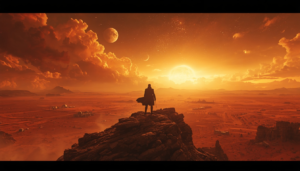
Within the Lifehouse story, the song relates to people leaving a damaged environment in search of something better. The wasteland is therefore something to escape rather than embrace.
This changes the meaning of the teenage wasteland in Baba O’Riley. What sounds like a rebellious slogan becomes an observation about wasted youth and a society that has failed its younger generation.
There are echoes here of Behind Blue Eyes, where Townshend similarly looks beneath outward behaviour to uncover frustration and emotional isolation.

Rebellion Escape and the Search for Something Better
The lyrics are remarkably economical. Townshend does not explain everything to us. Instead, he provides fragments of movement, struggle and determination.
Fighting for survival rather than glory
The opening establishes a narrator who has worked and fought for what he has. There is pride in that struggle, but also exhaustion.
For me, this is where the idea of teenage rebellion and freedom in Baba O’Riley becomes interesting. The song isn’t rebellion simply for the pleasure of breaking rules. Its characters want freedom because the world around them appears to have stopped offering meaningful possibilities.
They are moving towards something.
That distinction matters. Rebellion without purpose can become destructive, whereas rebellion motivated by hope can become the first stage of renewal.
Townshend revisited that mixture of desperation and transcendence with extraordinary emotional force in Love Reign O’er Me.
Spiritual awakening within a rock anthem
Meher Baba’s influence helps explain the spiritual awakening and escape in Baba O’Riley. Townshend was increasingly interested in the possibility that music could transcend entertainment and become a route towards connection.
That idea sits beneath much of Lifehouse.
The characters may inhabit a damaged physical world, but Townshend refuses to suggest that their inner lives must be equally barren. Music offers another possibility.
This is one reason the song’s emotional trajectory reminds me of Led Zeppelin’s Stairway to Heaven. Both songs grow beyond conventional rock structures and seem to search for something almost transcendent.
Why Baba O’Riley Still Feels Hopeful
The extraordinary final section changes the emotional temperature again. Dave Arbus of East of Eden contributes the violin that accelerates the song towards its exhilarating conclusion.
The controlled electronic pulse of the beginning has become something wild and human.
That transformation captures the youth disillusionment and hope in The Who classic beautifully. We begin in a technological landscape and finish with music that sounds almost impossible to contain.
For me, that is why “Baba O’Riley” remains uplifting despite its darker themes.
It recognises disillusionment without surrendering to it.
Frequently Asked Question
Conclusion
More than half a century after Who’s Next, the themes remain familiar. Young people still inherit problems they didn’t create. Technology still promises connection while sometimes increasing isolation. Every generation wonders whether the world it has inherited can be changed.
That is ultimately why The Who Baba O’Riley Lyrics Meaning reaches far beyond its famous refrain. “Teenage wasteland” describes the problem, not the destination.
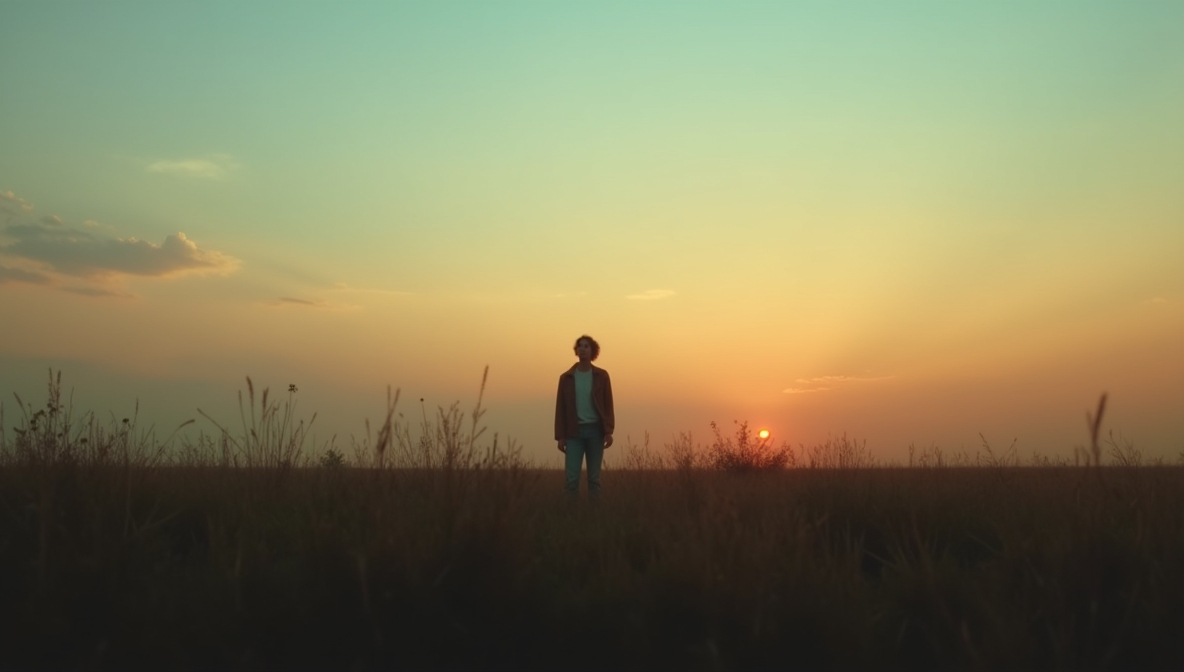
The destination is freedom.
That makes “Baba O’Riley” a natural addition to our Life Lessons in Music: when the landscape around us appears barren, the answer is not necessarily acceptance. Sometimes hope begins by recognising that there must be somewhere better to go.
“Save the trees, they allow us to breathe.”
– Stephenism
🎵 Soul from the Solo Blogger — Tunes from Túrail.