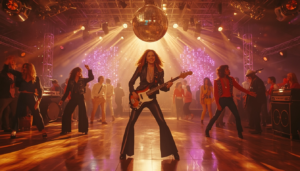

The Who Wont Get Fooled Again Lyrics Meaning is rooted in Pete Townshend’s ambitious Lifehouse project, conceived as a multimedia successor to Tommy. When Lifehouse proved too complicated to complete as originally envisaged, several of its songs survived and formed the backbone of Who’s Next. Won’t Get Fooled Again became the album’s explosive closing track.
Written by Townshend, the song was released as a single in June 1971 before appearing on Who’s Next that August. The classic line-up of The Who comprised Roger Daltrey on vocals, Pete Townshend on guitar and keyboards, John Entwistle on bass and Keith Moon on drums.
The UK single appeared on Track Records, making Track Records the appropriate record-label tag. It reached No. 9 in Britain, while the US Decca release reached No. 15.
The Who Wont Get Fooled Again Lyrics Meaning and Revolution
This is one of those songs where the sheer power of The Who can initially disguise just how cynical the words are. It sounds like a revolutionary anthem, but Townshend is questioning revolution rather than blindly celebrating it.
The narrator watches an old order collapse and a new one take its place. People fight, slogans change and leaders fall, yet there is a growing suspicion that nothing fundamental has changed.
That political disillusionment in Wont Get Fooled Again gives the song its lasting relevance. Townshend is less interested in whether revolution comes from the left or right than in what happens when idealism collides with the realities of power.
1. Revolution Does Not Guarantee Change
The first powerful truth is that overthrowing an establishment does not necessarily destroy the system that created it. New leaders can inherit the same institutions, temptations and appetite for control.
This is where the cynicism about political change in Wont Get Fooled Again becomes particularly sharp. The revolutionaries may believe they are building something new, but eventually they risk becoming another establishment.
It is a theme that fits naturally alongside the emotional conflict explored in Behind Blue Eyes, where appearances similarly conceal something much more complicated underneath.
2. Beware the People Offering Easy Answers
There is also a warning about surrendering independent judgement to movements and charismatic leaders. Townshend seems suspicious of anyone claiming that one dramatic upheaval can solve society’s problems.
For me, this is where revolution and betrayal in The Whos anthem becomes more than political commentary. It becomes a broader life lesson: promises deserve scrutiny regardless of who makes them.
That questioning spirit also appears in Baba O’Riley, another Who’s Next song born from the abandoned Lifehouse concept.
3 Powerful Feelings Behind Wont Get Fooled Again
Musically, the song creates an extraordinary mixture of anger, determination and release. Townshend’s repeating electronic pattern provides an almost mechanical foundation while Entwistle and Moon constantly threaten to tear through it.
3. Anger Becomes Defiance
Daltrey’s vocal does not sound defeated. Instead, disillusionment produces determination. The narrator has learned from experience and refuses to surrender his judgement again.
The famous closing idea — the meaning of Meet the new boss same as the old boss — distils the entire song into one devastating observation. Changing the person at the top means little if the underlying behaviour remains unchanged.
Then comes Daltrey’s legendary scream. As a fan, I find it difficult to imagine a more effective release of everything the previous eight minutes have been building towards.
4. Power Can Corrupt Idealism
The fourth truth is uncomfortable because it applies to almost everyone. Today’s rebel can become tomorrow’s authority figure. Once power changes hands, yesterday’s promises can quickly become inconvenient.
That makes the song less about one particular political movement and more about human behaviour.
5. Think for Yourself
Ultimately, the most positive message is independence of thought. The narrator cannot guarantee that leaders will improve, but he can change how readily he believes them.
That lesson makes Won’t Get Fooled Again an ideal fit for the wider Life Lessons in Song collection. There is also an interesting emotional contrast with Love Reign O’er Me, where surrender carries an entirely different meaning.
Frequently Asked Question
Conclusion
The Who Wont Get Fooled Again Lyrics Meaning ultimately comes down to a deceptively simple lesson: changing leaders does not necessarily change human nature. More than half a century after its release, Townshend’s warning still lands with remarkable force. Revolutions may come and go, but perhaps the best defence against being fooled again is learning to question the promises made along the way.
“The hardest words aren’t the ones you can’t find — they’re the ones you found too late.”
Stephenism
🎵 Soul from the Solo Blogger — Tunes from Túrail.