
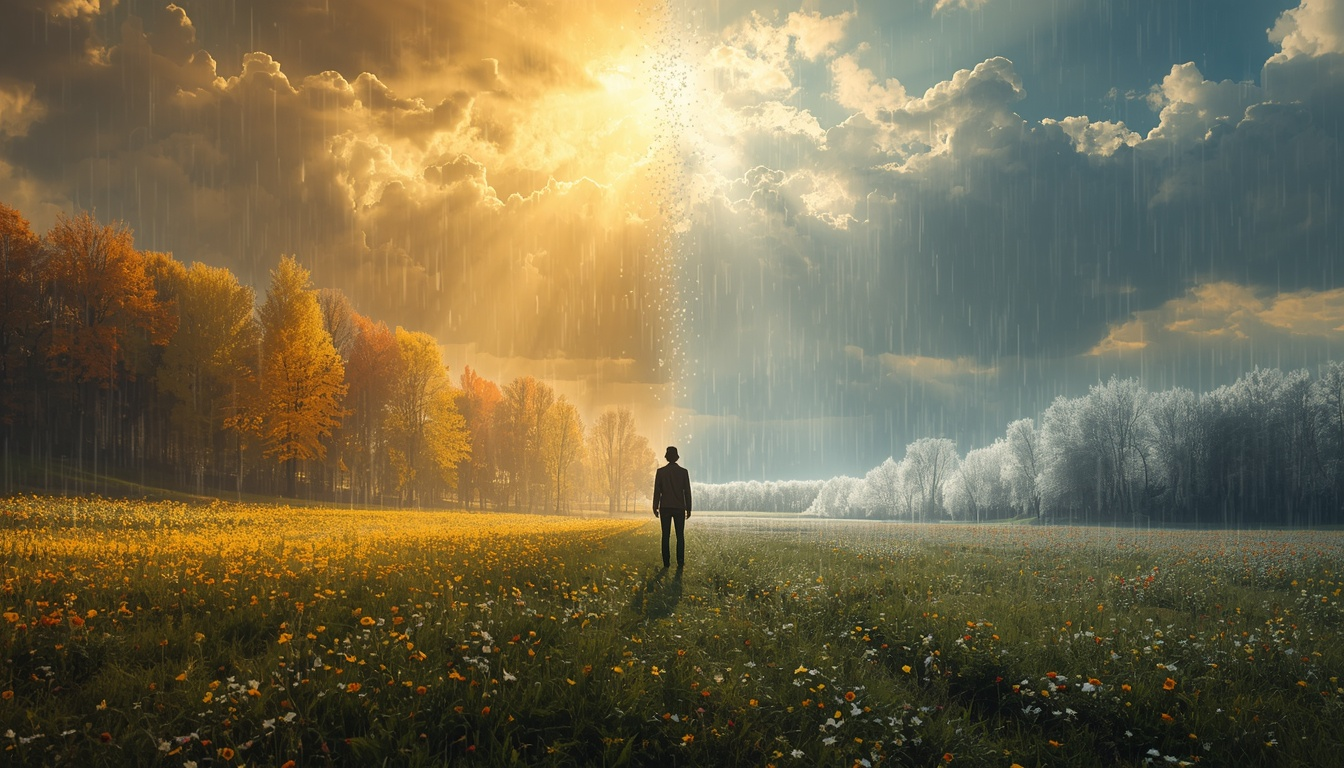
The Led Zeppelin The Rain Song Lyrics Meaning reveals one of the most beautiful and emotionally sophisticated pieces in the band’s catalogue. Released in 1973 on the album Houses of the Holy, the song demonstrated a softer side of Led Zeppelin that contrasted sharply with their reputation for hard rock and heavy blues.
According to Jimmy Page, the song was inspired after Beatle George Harrison jokingly suggested that Led Zeppelin never wrote ballads. The result was a lush, orchestral composition that explored love, emotional transformation, and the changing seasons of life. Recorded for Atlantic Records, the song remains one of the band’s most beloved works.
Led Zeppelin consisted of four members: Robert Plant (vocals), Jimmy Page (guitars), John Paul Jones (bass, keyboards), and John Bonham (drums).
As a lifelong rock fan, I’ve always felt that “The Rain Song” showcases the band’s emotional intelligence as much as their musical talent. It is a song that grows richer with every listen.
For more information about the band, visit the official Led Zeppelin website.
The Story Behind the Seasons
Understanding the Led Zeppelin The Rain Song Lyrics Meaning begins with its central metaphor.

The lyrics use changing weather and seasons to represent the evolution of love. Spring, summer, autumn, and winter become symbols for different emotional states and stages of a relationship.
The meaning of Led Zeppelin The Rain Song lyrics emerges through these natural images. Rain symbolises sadness, uncertainty, and reflection, while sunshine represents hope, connection, and emotional fulfilment.
Rather than presenting love as a fixed emotion, the song portrays it as something that develops and transforms over time.
For readers interested in songs that explore life’s deeper lessons, visit our Life Lessons collection.
The Led Zeppelin The Rain Song Lyrics Meaning explores the changing seasons as a powerful metaphor for love, emotional growth, and the passage of time.
Love as a Journey Rather Than a Destination
One reason the Led Zeppelin The Rain Song song lyrics meaning remains so compelling is its mature view of relationships.
Many love songs focus solely on passion or heartbreak. “The Rain Song” embraces both.
The lyrics acknowledge that relationships experience periods of warmth and coldness, certainty and doubt. Yet these changes are not presented as failures. Instead, they are portrayed as natural parts of emotional growth.
This perspective gives the song an enduring quality that listeners of all ages can appreciate.
Led Zeppelin The Rain Song Lyrics Meaning: 7 Powerful Insights
The Led Zeppelin The Rain Song meaning explained cannot rely solely on the lyrics because the music itself communicates much of the song’s emotional depth.
Jimmy Page’s delicate guitar work creates a feeling of vulnerability and openness. John Paul Jones’ Mellotron arrangements add orchestral textures that expand the emotional landscape.
The Led Zeppelin The Rain Song Lyrics Meaning resonates with listeners through its poetic imagery, capturing the beauty of love as it evolves through life’s emotional seasons.
Why the Song Feels So Timeless
The gradual musical development mirrors the lyrical journey.
The song begins quietly and reflectively before expanding into richer, more dramatic passages. This progression feels like the unfolding of a relationship itself.
The combination of gentle melodies and emotional imagery helps explain what The Rain Song by Led Zeppelin means to so many listeners. It is a celebration of change rather than a fear of it.
The same willingness to explore deeper emotional territory can also be heard in Since I’ve Been Loving You, another Zeppelin masterpiece built around vulnerability and feeling.
Exploring the Led Zeppelin The Rain Song Lyrics Meaning reveals a heartfelt reflection on transformation, showing how love can endure and deepen through periods of change.
Nature as a Reflection of Human Emotion
The weather imagery serves an important purpose.
Rain, sunshine, and changing seasons are experiences everyone understands. By connecting these universal experiences to love and personal growth, the song becomes instantly relatable.
The meaning of Led Zeppelin The Rain Song lyrics resonates because it reflects how people naturally experience emotional change throughout life.
Why The Rain Song Still Resonates Today
More than fifty years after its release, the Led Zeppelin The Rain Song Lyrics Meaning continues to inspire listeners.
The song’s message remains relevant because life itself is filled with cycles of change. Relationships evolve, emotions shift, and people grow through experience.
The Led Zeppelin The Rain Song song lyrics meaning reminds us that these changes should not be feared. They are essential parts of love and personal development.
Fans who enjoy the reflective side of Led Zeppelin may also appreciate No Quarter, In the Light, Kashmir, and When the Levee Breaks, each of which explores transformation in a different way.
Frequently Asked Question
Conclusion
The Led Zeppelin The Rain Song Lyrics Meaning reveals a profound meditation on love, change, and emotional maturity.
Through its beautiful seasonal imagery and evolving musical landscape, the song celebrates the natural cycles that shape relationships and personal growth. The Led Zeppelin The Rain Song meaning explained through both lyrics and music shows that transformation is not something to fear but something to embrace.
Understanding what The Rain Song by Led Zeppelin means helps explain why this timeless ballad remains one of the band’s most cherished and emotionally resonant recordings.
“Save the trees, they allow us to breathe.”
– Stephenism
🎵 Soul from the Solo Blogger — Tunes from Túrail.