
Joan Baez Me and Bobby McGee Lyrics Meaning: 7 Hopeful Insights
Joan Baez’s “Me and Bobby McGee” transforms a classic road song into a reflective meditation on freedom, companionship, nostalgia, and the emotional cost of letting go.

Joan Baez is one of the most influential voices in folk music history, celebrated for her emotional vocal style, social activism, and timeless interpretations of classic songs. Born Joan Chandos Baez on January 9, 1941, in Staten Island, New York, Joan Baez became a defining figure of the 1960s folk revival movement alongside artists such as Bob Dylan, Pete Seeger, and Joni Mitchell.
Throughout her career, Joan Baez blended music with activism, becoming closely associated with civil rights campaigns, anti-war protests, and humanitarian causes. Her ability to combine political awareness with emotional sincerity helped distinguish Joan Baez from many other folk performers of the era. Songs such as “Diamonds and Rust,” “Blowin’ in the Wind,” and “The Night They Drove Old Dixie Down” remain enduring examples of her reflective storytelling style and compassionate artistry.
Joan Baez first gained major attention after her appearance at the Newport Folk Festival in 1959. Her debut album quickly established her reputation for acoustic folk arrangements and emotionally pure vocal performances. Over the decades, Joan Baez recorded for labels including Vanguard Records and later A&M Records, producing a catalogue that crossed folk, country, protest music, and singer-songwriter traditions.
One reason Joan Baez remains so respected is her commitment to authenticity. While many artists adapted to changing musical trends, Joan Baez consistently prioritised emotional honesty and lyrical meaning over commercial spectacle. Her interpretations often transformed songs into deeply personal experiences filled with warmth, melancholy, and moral reflection.
Joan Baez also received significant recognition throughout her career. She was inducted into the Rock and Roll Hall of Fame in 2017 and received numerous humanitarian and lifetime achievement honours for both her music and activism. Her influence can still be heard in generations of folk, acoustic, and socially conscious artists who followed her path.
Even decades after her commercial peak, Joan Baez continues to symbolise the emotional and ethical spirit of folk music. Her songs remain timeless because they focus not only on melody, but on humanity itself.
Joan Baez’s “Me and Bobby McGee” transforms a classic road song into a reflective meditation on freedom, companionship, nostalgia, and the emotional cost of letting go.
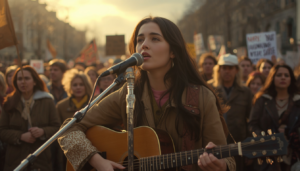
Joan Baez’s “Blowin’ in the Wind” transforms Bob Dylan’s iconic protest song into a timeless reflection on peace, justice, compassion, and humanity’s search for understanding.

Joan Baez’s “The Night They Drove Old Dixie Down” transforms a Civil War narrative into a haunting reflection on loss, resilience, and the emotional devastation left behind by conflict.

Joan Baez’s “Diamonds and Rust” is a haunting reflection on memory, lost love, and emotional distance, blending poetic folk storytelling with deeply personal nostalgia inspired by her relationship with Bob Dylan.